
ON-SITE TEXTILE EMBELLISHMENT: ALL YOU NEED TO KNOW ABOUT A MOBILE SERVICE
A mobile embellishment service makes sense whenever embellishment is not just a production step, but part of the moment. In simple terms: production moves to where it’s needed – directly to the event. In practice, this mainly applies to events, outfittings, or activations where timing, personalisation, and handover come together. This is exactly where on-site embellishment shows its strengths. In this article, we’ll explain when a mobile embellishment service makes sense, how it works, and what you should consider. When does on-site embellishment make sense? Not every project requires production at the event location. But there are clear situations where [...]
RFID IN FAN SHOPS: HOW SELF-CHECKOUT STORES WORK FOR FOOTBALL CLUBS
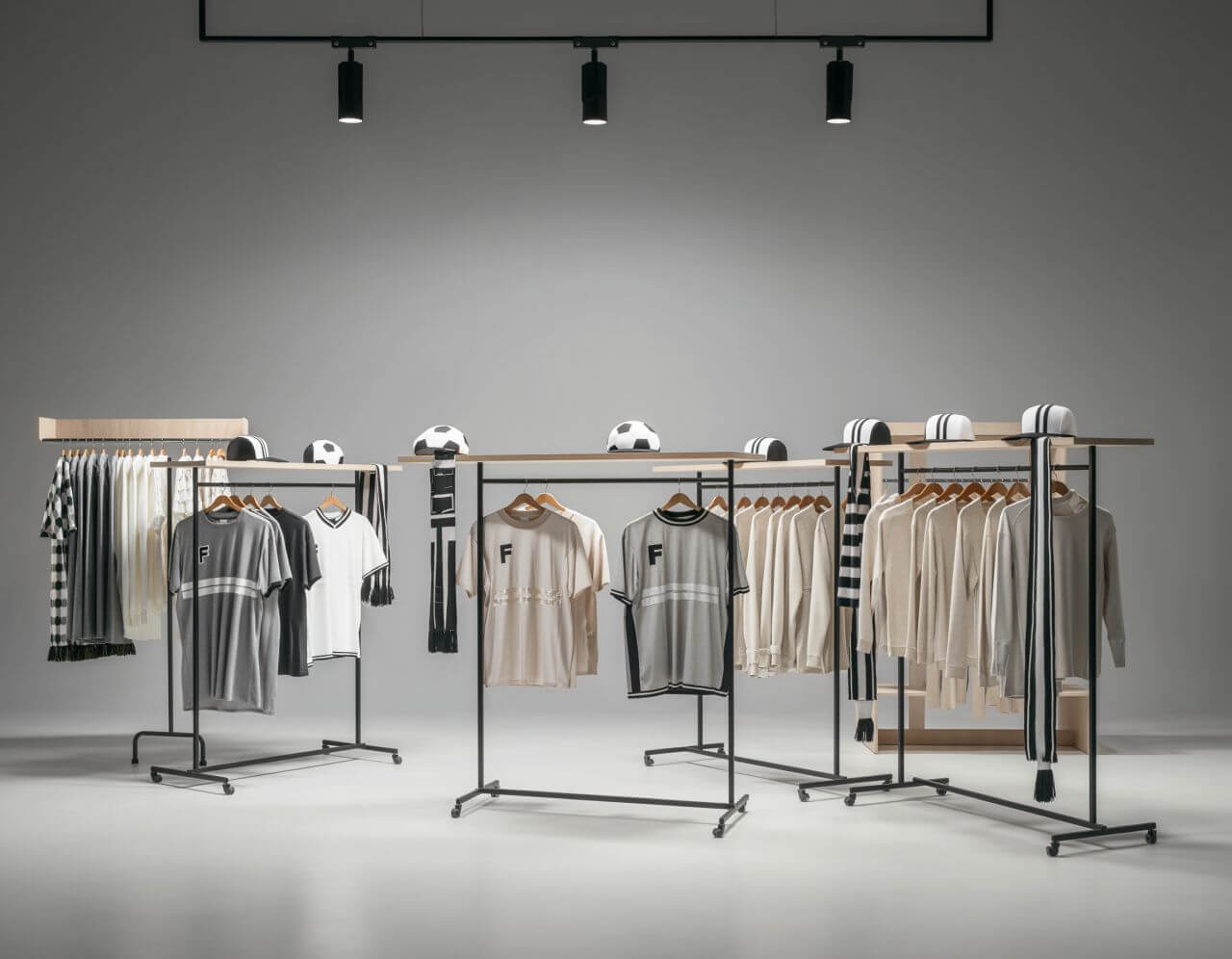
RFID-based self-checkout fan shops , often referred to as self-service retail solutions, allow football clubs to automatically identify merchandise and offer fans a fast checkout experience without scanning individual barcodes. Each item is equipped with an RFID tag that is detected by a reader when products are placed in the checkout area. The system automatically creates the shopping cart, and the fan completes the payment directly at the terminal. In practice, this means shorter queues, faster purchases, and significantly better inventory visibility. Especially in stadium environments, this can make a major difference. When the fan shop is busier than [...]
DIGITAL PRODUCT PASSPORT (DPP): WHERE DOES THE DATA COME FROM? HOW TO BUILD THE FOUNDATION (PART 4)
👋 Welcome to Part 4 of our DPP mini-series. In the first three parts, we explored: • where the Digital Product Passport can be placed on your product • how your textile connects technically to the DPP (QR or NFC) • what kind of digital experience your customers see after scanning But one crucial question remains: Where does the data in the Digital Product Passport actually come from? Because an NFC chip or QR code does not contain the product information itself. It simply acts as a gateway to a system in the background. And that’s where the real foundation [...]

RFID IN TEXTILES EXPLAINED: HOW THE TECHNOLOGY WORKS – AND WHY IT MATTERS FOR BRANDS AND CLUBS
RFID (Radio Frequency Identification) is a technology that allows products to be identified wirelessly and without physical contact. Unlike barcodes, items do not need to be scanned individually or be directly visible. RFID readers can detect multiple products at the same time – automatically and without manual scanning. Because of this, RFID is increasingly used when large quantities of textile products need to be identified quickly and reliably. When Suddenly Thousands of Products Need to Be Counted Imagine you are responsible for a new collection or a complete teamwear program. In the warehouse there are thousands of items: jerseys training [...]
LIMITED EDITION “THE 12TH MAN” – WHEN A JERSEY BECOMES A DIGITAL MEMBERSHIP
A limited special-edition jersey is nothing unusual anymore. Anniversary. Derby. Promotion. Cup win. Almost every club now releases at least one special edition per season. The idea behind it is simple: exclusivity creates desirability. Desirability creates revenue. But here is the key question: What actually happens after the sale? Does the jersey remain a beautiful collector’s item in the wardrobe? Or can it become the starting point of a long-term fan relationship? In this article, we show how a limited-edition jersey can become a digital membership — without forcing fans to download an app, but with measurable value for clubs, [...]

THE "SILENT" TEXTILE PROBLEM: WHY BRANDS MISUNDERSTAND THEIR MOST IMPORTANT ASSET
A garment is developed, produced and sold. In the ERP system, it appears as an SKU. In the campaign, as a visual. In the calculation, as margin. And then? Strategically, it disappears from view. Yet this is often where its real impact begins. A textile product is not disposable. It is worn, shown, photographed and shared. It accompanies people for years. And still, many brands treat it primarily as an operational unit. That is the “silent” textile problem. The Misconception Begins with Classification Most brands invest millions in campaigns, content, performance marketing and platform strategies. They optimise conversion rates, test [...]


